
By RestSage Team · Updated October 28, 2026 · 11 min read · How we review
Is your new memory foam pillow too firm? That doesn't always mean you bought the wrong pillow. This guide is research: we read the Sleep Foundation's pages on pillow types and foam odors, NASA's history of memory foam and what one contour pillow seller tells buyers. We haven't tested any of the pillows mentioned here. RestSage earns a commission if you buy a Derila pillow through our review, at no extra cost to you. Last checked: October 21, 2026.
Quick answer
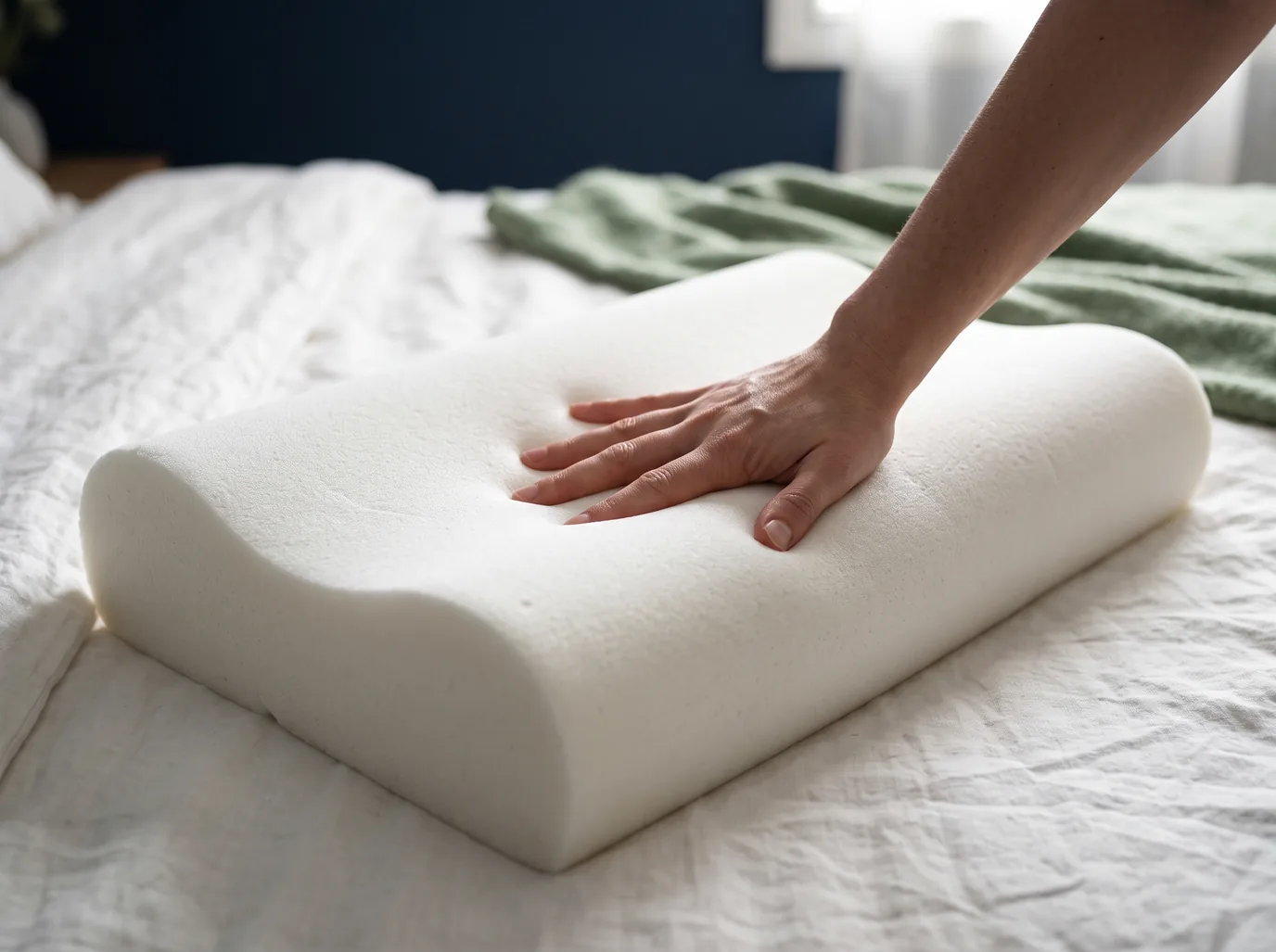
A memory foam pillow that feels too firm is often new foam in a cool room. The Sleep Foundation says memory foam "changes shape in response to heat and pressure," so it feels harder when it's cold and softens as it warms. Give it about a week in a room at a normal temperature, air out any smell, and check that the height suits you. If it still feels hard after a week, it's probably the design, not the break-in, and it's time to look at your return window.
The first-week plan, in short:
- Let a vacuum-packed pillow expand fully before you judge it.
- Air it in a ventilated room for the smell.
- Sleep on it for 7 nights and write one line each morning.
- Keep the room at your normal sleeping temperature. Don't heat the foam directly.
- After night 7, decide: keep, adjust or return.
Firm, or just new?
Three different things can make a new pillow feel hard. Each has a different fix, so it helps to know which one you have.
Cold foam. Memory foam is also called viscoelastic foam. The Sleep Foundation's types of pillows guide (updated May 22, 2023) says it "changes shape in response to heat and pressure." Cold foam responds slowly and feels stiffer. NASA's account of the original "temper foam" notes that later versions were made "less temperature-sensitive," so how much a pillow reacts depends on its formula (NASA Spinoff, 2005).
The wrong height. A pillow that's too tall for you pushes your head up. That can feel like hardness, even when the foam is soft. Height and firmness are separate choices, and our guide on how to choose a pillow covers both.
A firm design. Some pillows are simply made firm. The same Sleep Foundation guide says contour pillows are "usually made of firm memory foam." No amount of breaking in turns a firm design into a soft one.
Too firm or too tall: a two-minute check
Lie on the pillow in your usual position and notice where the pressure is.
| What you notice | More likely | Where to look |
|---|---|---|
| Your head feels pushed up and your chin tips toward your chest (on your back) | Too tall | Height, not firmness |
| On your side, your head tilts up toward the ceiling | Too tall | Height, not firmness |
| Your head barely sinks in and the surface feels hard on your ear or cheek | Too firm | Firmness and break-in |
| It feels hard at night but fine in the afternoon | Cold foam | Room temperature |
| It feels fine at first, then hard when you turn | Slow foam | Block foam is "slow to regain" its shape |
The last line comes from the Sleep Foundation guide, which says block memory foam pillows are "slow to regain their shape when the sleeper moves." If turning over is when it bothers you, the slow response may be the issue, not the hardness.
If your answer is "too tall," breaking it in won't help much. Skip to the section on when to stop trying.
Give it a week, and keep a short log
We found no official break-in standard for pillows. What you'll find is seller guidance. One contour pillow seller's FAQ, read on October 21, 2026, says "the full benefits become clearer after about 5–7 nights" (product page). Treat that as the seller's estimate, not a standard. The seller doesn't say what those benefits are, and we can't verify the claim.
A week is still a fair test, for a practical reason: the first night on any new pillow feels different because it is different. One night tells you little. Seven nights tell you whether it's getting better.
Keep one line per morning, on paper or in your phone:
- Night number
- How the pillow felt when you lay down: hard, OK or soft
- How it felt by morning
- Room temperature, if you know it
- Anything else: smell, heat, how often you turned
After night 7, read the log. If "hard" turns into "OK," the break-in is working. If every line still says "hard," the design is probably firmer than you like.
Warm the room, not the pillow
Because memory foam responds to heat, room temperature changes how it feels. A pillow that's been in a cold car, an unheated porch or a chilly bedroom will feel firmer at first.
What's reasonable to try:
- Bring it to room temperature before you judge it. A pillow delivered on a cold day needs time indoors first.
- Sleep in your normal room temperature. Your own body heat does the softening where your head rests.
- Use it. Heat and pressure are what soften the foam, and that happens while you sleep on it.

What we don't suggest: hair dryers, heaters, electric blankets pressed against the foam or a microwave. None of the sources we read recommend heating the foam directly, and the seller we read says to spot-clean the foam only. Don't wash the core to soften it either; check the care label first.
Use the right side of a contour pillow
Shaped pillows often have two edges of different height. One contour seller's FAQ, read on October 21, 2026, says "back sleepers typically benefit from the thinner contour side, while side sleepers often prefer the higher contour end."
So before you decide a contour pillow is too firm, try:
- Turning it around so the lower edge is under your neck.
- Keeping your shoulders on the mattress, not on the pillow.
- Flipping it over if the maker says both faces can be used.
If the lower edge feels better, the problem was height. That's good news, because it means the pillow can still work.
The new-foam smell: why it happens and how to air it out
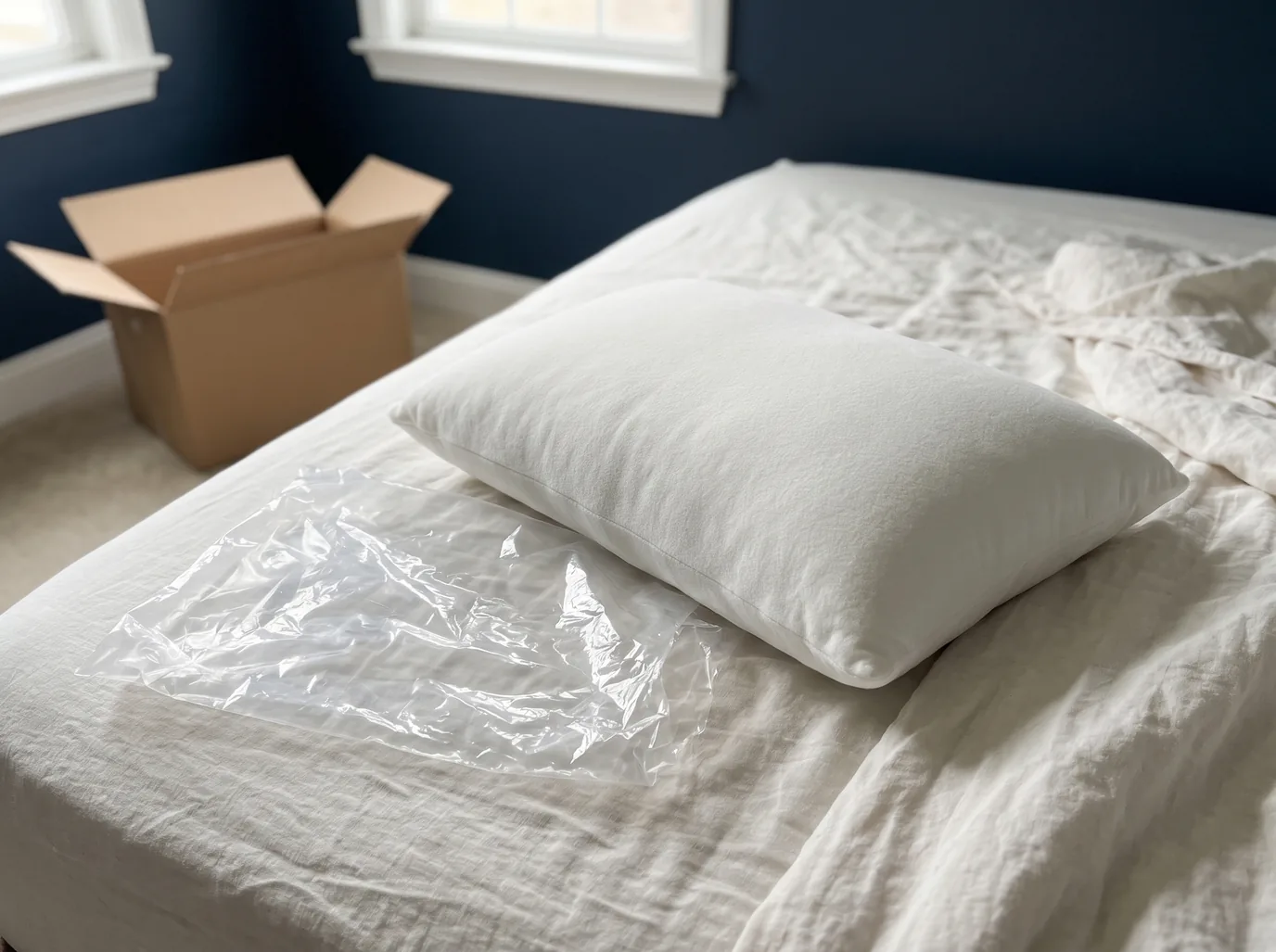
Many new foam pillows smell when you open them. The Sleep Foundation's off-gassing page (updated January 5, 2024) says the odor comes from volatile organic compounds, or VOCs, left over from making the foam. It adds that vacuum sealing "traps chemical byproducts until you open the package in your home."
How long it lasts: the same page says most odors fade within a few hours, but "you may be able to smell traces for several days to a few weeks." The types of pillows guide says the smell "should air out within a few days as long as you leave the pillow in a well-ventilated room."
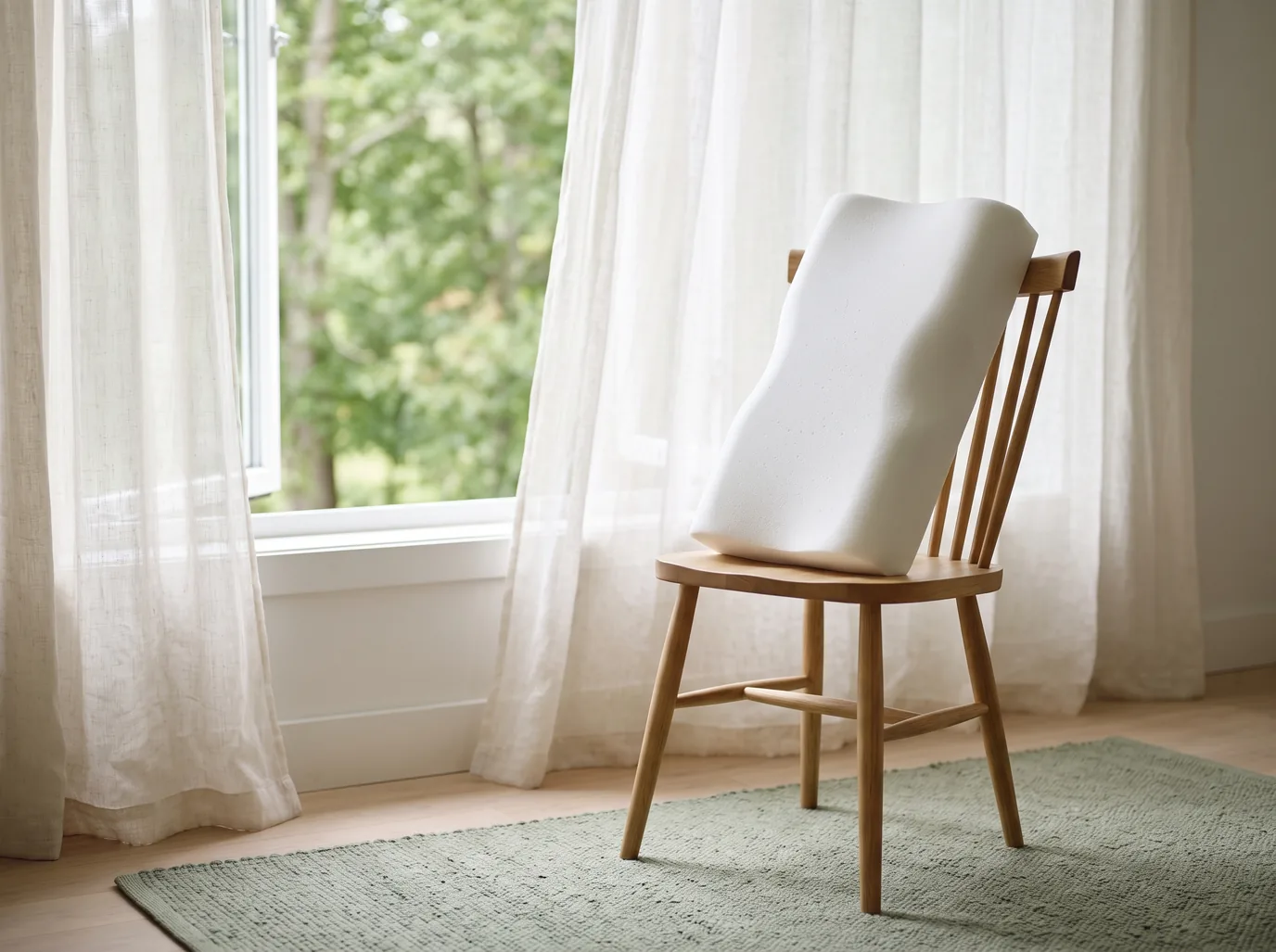
To air it out:
- Take it out of the plastic and remove the cover. Wash the cover if the label allows.
- Put it in a well-ventilated room, ideally not the bedroom for the first day.
- Open a window or run a fan. The Sleep Foundation suggests "opening windows or using fans to help speed up the release of off-gassing odors."
- Give it a day or two before the first night if the smell is strong.
On safety, the Sleep Foundation says "off-gassing odors pose no known serious health risks, but they can be unpleasant," and that in sensitive people it "may cause temporary symptoms, such as headache, nausea, or dizziness." If the smell bothers you that much, keep it out of the bedroom, keep airing it and contact the seller.
A smell that comes back after weeks of use is a different problem. It's more likely a cleaning issue than a break-in one.
What a foam certification tells you about smell
The Sleep Foundation's off-gassing page lists CertiPUR-US, OEKO-TEX, GREENGUARD Gold and eco-INSTITUT among the certifications that check content and emissions. A label like that tells you the foam met that program's standards for content and emissions. It doesn't promise there will be no smell on day one, and it says nothing about firmness.
When to stop trying
Breaking in has a limit, and so does your return window. Plan both at once.
| Day | What to do |
|---|---|
| Day 0 | Before you open a vacuum bag, read the return rule and note the last day |
| Day 1 | Open it, let it expand, air it out |
| Days 2 to 8 | Seven nights on it, one log line each morning |
| Day 9 | Decide: keep it, try the lower edge, or start a return |
| Well before the deadline | Ask support in writing; don't wait for the last week |
Stop trying if:
- After a week, the log still says "hard" most nights.
- The lower edge doesn't fix it, which points to a firm design.
- You wake up sore or numb. A pillow is a comfort choice; if pain or numbness keeps up, talk to a doctor.
Some sellers only refund a pillow in its original packaging, and a vacuum bag can't be resealed. If you bought a Derila pillow, our guide to the Derila return policy explains what its store and ClickBank say, line by line.
If you buy again: what to look for
If firmness is why you're returning it, the next pillow should fix that on paper before you pay.
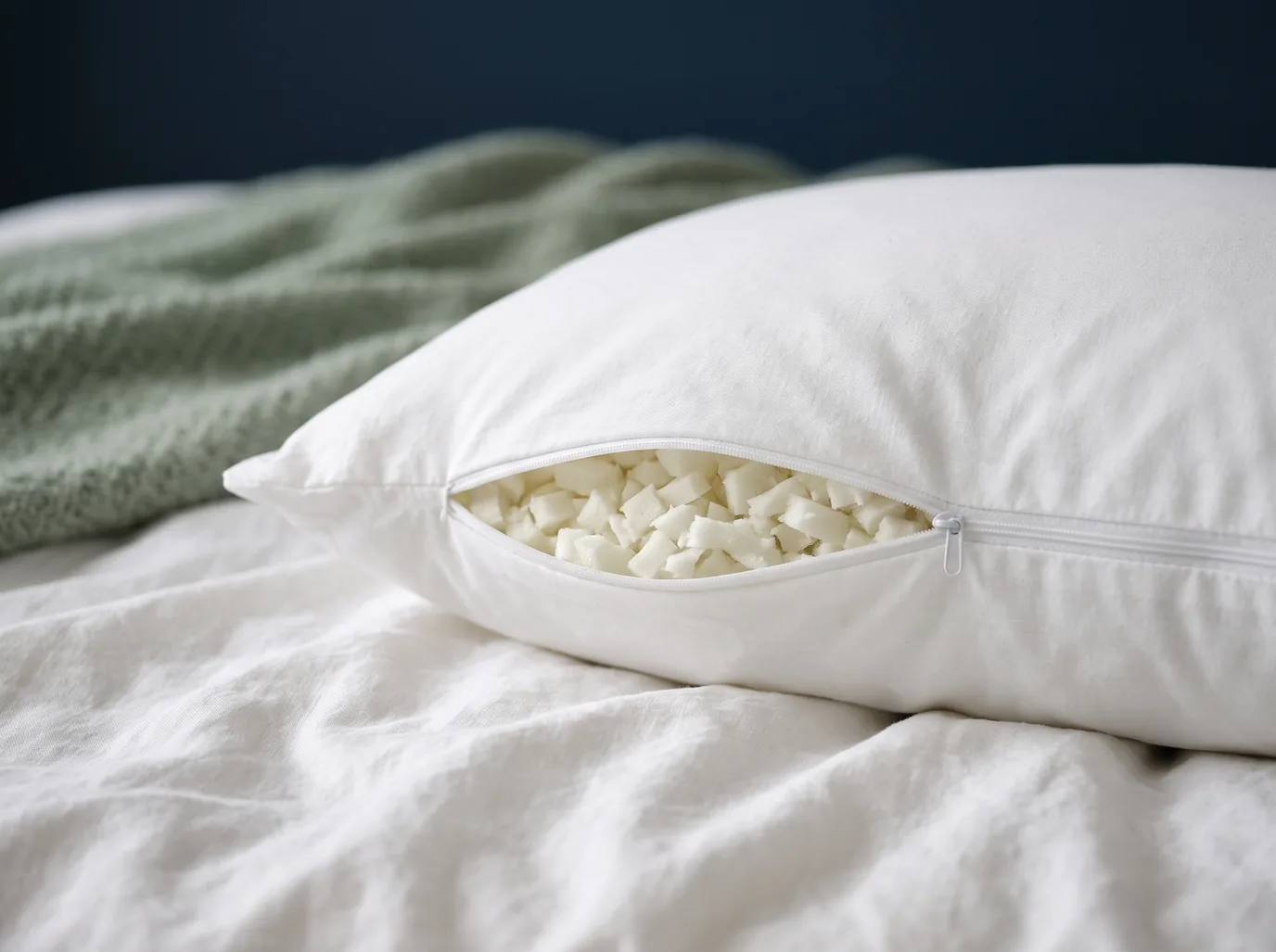
- Shredded foam instead of a solid block. The Sleep Foundation says shredded memory foam pillows "allow sleepers to scrunch and mold the pillow as needed," and some have "removable fill for customizable loft and firmness."
- A firmness rating from the seller, plus buyer reviews that describe the firmness.
- A return rule that covers an opened pillow, if you want to try before you commit.
Our Derila Ergo research review looks at one firm contour pillow and what to check before you order it. For the full set of choices, see how to choose a pillow.
Common mistakes
- Judging it on night one. A new pillow always feels unfamiliar. Give it a week.
- Judging it cold. A pillow fresh from a cold porch feels firmer than it will at room temperature.
- Calling it firm when it's tall. If your head tips up, the height is the problem.
- Using the wrong edge of a contour pillow. Try the lower side before you decide.
- Heating the foam directly. Use body heat and room temperature, not a dryer or heater.
- Opening the bag before reading the return rule. Some sellers only refund sealed pillows.
- Waiting until the last week to ask. Replies and return forms take days.
Key takeaways
- Memory foam "changes shape in response to heat and pressure," per the Sleep Foundation. Cold makes it feel harder.
- Firmness and height are different problems. Check height first.
- Seven nights with a one-line log is a fair test.
- New-foam smell usually fades within hours or a few days with airing, though traces can last for weeks.
- Contour pillows are usually firm by design, and break-in won't change that.
- Plan the break-in and the return deadline together, from day 0.
Related guides
- How to choose a pillow: height, firmness and fill before your next purchase.
- Derila return policy: the store and ClickBank rules for an opened pillow.
- Derila Ergo research review: a firm contour pillow, with the checkout and ratings checked.
- Editorial policy: how we research and date every claim.
Sources we checked
All pages opened on October 21, 2026.
- Sleep Foundation, "Types of Pillows", by Jeremy Klein, updated May 22, 2023: heat and pressure, block and shredded foam, contour pillows, initial odor.
- Sleep Foundation, "Off-Gassing", by Jeremy Klein, updated January 5, 2024: VOCs, how long odors last, ventilation, certifications.
- NASA Spinoff 2005, "Forty-Year-Old Foam Springs Back With New Benefits": origin of temper foam and less temperature-sensitive later versions.
- Derila Ergo product page: the seller's FAQ on 5 to 7 nights and which edge suits which sleeper, and its care label.
Frequently asked questions
Do memory foam pillows soften over time?
They can feel softer as they warm up and as you use them, because memory foam "changes shape in response to heat and pressure," per the Sleep Foundation. A pillow built firm, like most contour pillows, will still feel firm after the break-in.
How long does it take to break in a memory foam pillow?
We found no official standard. One contour pillow seller says "the full benefits become clearer after about 5–7 nights," which is the seller's estimate. Seven nights with a short morning log is a fair test before you decide.
Why is my new memory foam pillow so hard?
The three usual reasons are cold foam, a pillow that's too tall for you, or a firm design. Bring it to room temperature, check whether your head tips up, and try the lower edge if it's a contour pillow.
Does memory foam get firmer when it's cold?
Yes. Memory foam responds to heat, so a cold pillow feels stiffer and slower. NASA notes that later foams were made "less temperature-sensitive" than the original, so how much a pillow changes depends on its formula.
How long does the memory foam pillow smell last?
The Sleep Foundation says most new-foam odors fade within a few hours, but traces can last "several days to a few weeks." In a well-ventilated room, it says a pillow's smell "should air out within a few days."
How do you get the smell out of a new memory foam pillow?
Take it out of the plastic, remove the cover, and leave it in a ventilated room with a window open or a fan running for a day or two. Wash the cover if its label allows. Don't wash the foam core unless the label says you can.
Is the smell from a new memory foam pillow harmful?
The Sleep Foundation says "off-gassing odors pose no known serious health risks, but they can be unpleasant," and that sensitive people may get temporary symptoms such as a headache. If it bothers you, keep airing it outside the bedroom and contact the seller.
Should I return a memory foam pillow that's too firm?
If it still feels hard after about a week, and neither the lower edge nor a warmer room helps, it's reasonable to send it back. Check the return rule first: some sellers only take pillows back in their original packaging. Ask support in writing well before the deadline.
Next step
Start the 7-night log tonight, and write down your return deadline on the first line. If you bought a Derila pillow, read the Derila return policy guide before you open the bag, or now if you already have.
General information, not medical advice. Comfort varies from person to person; if you have ongoing pain, numbness or breathing problems during sleep, talk to a doctor.